
The commercial property insurance market has shifted materially. After years of steep rate increases and capacity constraints, carrier profitability has pulled competition back into the market. For most buyers, this means better pricing and terms are available. But only for accounts that come to market prepared.
What's happening
Insurers reported strong profits in 2025. A light U.S. hurricane season and catastrophe losses that came in at or below expected ranges improved carrier balance sheets and increased appetite for new business. Early 2026 storm forecasts remain favorable, which extends the competitive window into midyear renewals and gives buyers more room to negotiate. In practice, the leverage is showing up in structured programs where carriers are competing on both pricing and terms, not just capacity.
Worldwide insured catastrophe losses, tracked by Munich Re and adjusted for inflation, have been relatively stable over the past several years. There were no major U.S. hurricanes in 2025, and while global catastrophe losses remain elevated in absolute terms, they have not been escalating year over year. That stability is a key factor in the improved market conditions buyers are experiencing.
The practical effect: many businesses that absorbed significant premium and deductible increases over the past several years are now seeing partial reversals, particularly in shared-and-layered programs and the surplus lines market. Incumbent carriers are working to hold their rates at renewal.
Where pressure remains
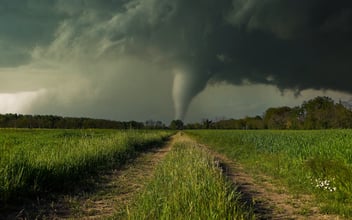
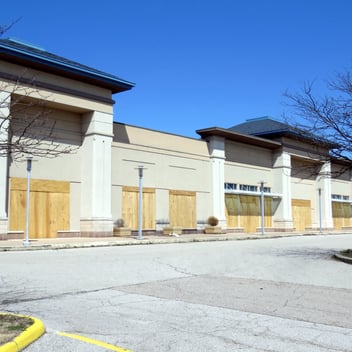
The improvement is not uniform. Properties in natural disaster zones, including wildfire corridors, coastal windstorm regions, and hail-prone areas, continue to face rate pressure regardless of broader market trends. Higher wind and hail deductibles are becoming standard in many policies, even for accounts with clean loss histories. This is a structural shift in how carriers price catastrophe-exposed properties, not a temporary adjustment. For exposed properties, commercial property preparedness directly affects both loss outcomes and underwriting treatment.
The geographic concentration of catastrophe losses keeps certain accounts in hard-market territory even as the broader market softens. If your properties are in exposed regions, the competitive dynamics described above may not apply to your account in the same way. A more targeted renewal strategy is needed for these locations.
What carriers care about
Loss control follow-through. Accounts that have favorably addressed loss control recommendations are getting better terms and pricing. Carriers track whether their inspection recommendations were acted on, particularly around roof age and condition, electrical system maintenance, sprinkler system adequacy, and height and density of product storage. Documented improvements in these areas directly influence how underwriters price the account. As covered previously, carrier recommendations are not optional in this market.
Insurance to value. Carriers are scrutinizing building, stock, and equipment valuations to ensure they capture full exposure. Buyers who have not updated valuations risk being underinsured at the worst possible time. This is both an underwriting requirement and a coverage protection issue. Pay careful attention to your valuations, especially if construction costs or replacement values have changed since your last review.
Submission quality. Thorough, well-organized submissions signal a serious account. Incomplete or rushed submissions get deprioritized, especially in a market where carriers have options. The quality of what your broker puts in front of underwriters determines how much competition you generate.
What to do now
Start renewal preparation at least 60 days out, 90 if possible. This gives your broker time to approach the market strategically and create genuine competition for your account.
Document every loss control improvement since the last renewal in writing. Include specifics: what was recommended, what action was taken, and when it was completed.
Review and update property valuations, including building, stock, and equipment schedules. If values have not been adjusted recently, they are almost certainly outdated.
Work with your broker to develop a marketing strategy that balances long-term carrier relationships with accountability for competitive terms. Loyalty without benchmarking is overpaying. But constant shopping without relationship investment erodes long-term stability.
The direction is favorable for commercial property insurance in 2026, but the spread between well-prepared accounts and everyone else is widening. Carriers have more options now. The accounts that make it easy for underwriters to say yes are the ones capturing the best terms.
Want the full 2026 Buyer's Guide?
RBN's 2026 Buyer's Guide to Commercial Property & Casualty Insurance covers all six major coverage lines in detail, with the underwriting signals and renewal preparation tactics that drive the best outcomes.
Download the full guide (PDF, 11 pages)
Source: RBN's 2026 Buyer's Guide to Commercial Property & Casualty Insurance. Catastrophe loss data: Munich Re (inflation-adjusted).